Everdell
- 4.8
- Rating
- 10.00K
- Installs
- $9.99
- Price

 Analysis by App-foxy
I found Everdell much easier to enjoy once I stopped treating it like a quick, casual board game. It is a thoughtful digital adaptation for Android and iOS in which I gather resources, place workers, and build a woodland settlement. The setting is friendly and inviting, but the decisions become surprisingly demanding as the village grows and every new card competes for a limited place in my plan.
Developed by Dire Wolf Digital, this board game costs $9.99 and is rated for Everyone. It has earned a 4.8 average from around 3K ratings, with more than 10K installs, which gives a useful impression of how well it has connected with its audience. I would recommend it most to someone who likes card combinations, careful planning, and the feeling of improving a small engine over several turns rather than chasing constant action.
What to expect before your first woodland settlement
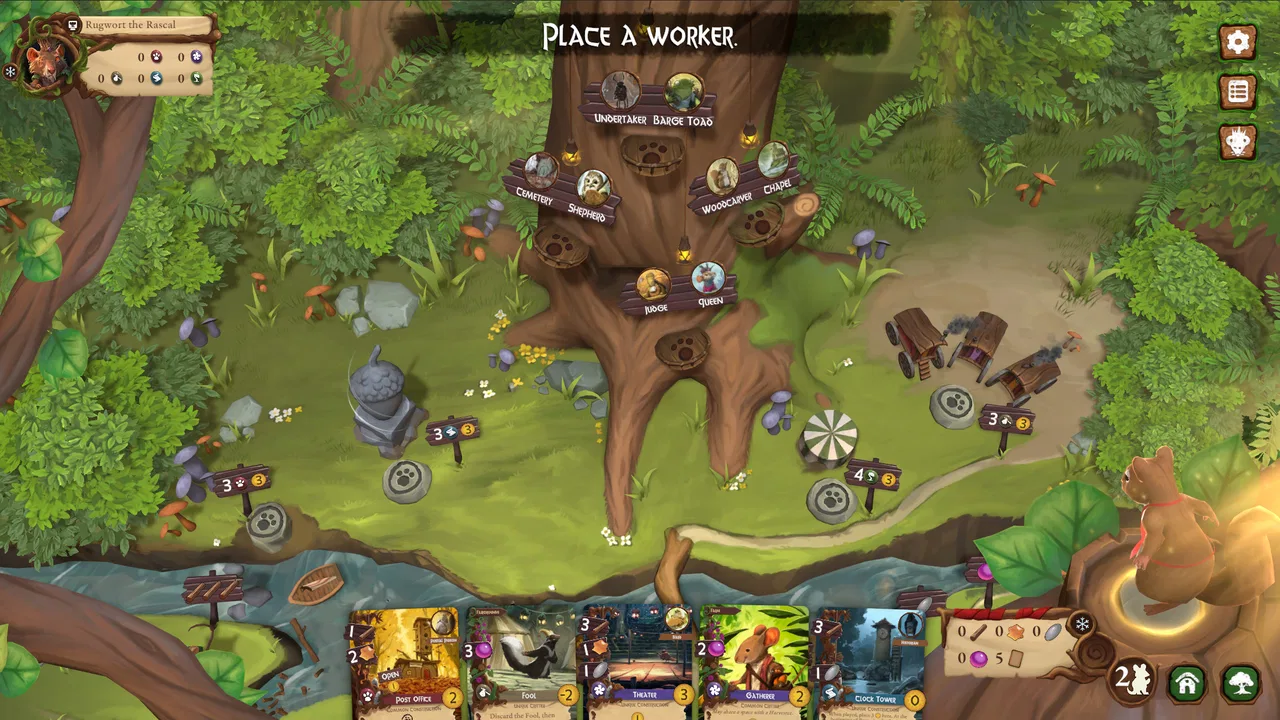
The central appeal is simple to describe but more interesting to play: I send workers to collect resources or trigger actions, then use those resources to construct buildings and invite creatures into my village. Each addition can make later turns more efficient, so the real pleasure comes from noticing connections between cards rather than merely adding the prettiest ones.
You May Also Like

 Pandora - Music & Podcasts
Pandora’s Music Is Easy to Start, but Harder to Recover
Pandora’s strength is its low-effort path from a seed to a station. Its weak spot is how much confidence it asks you to place in connection, setup, and quiet recovery.

 8 Ball Pool
 Is Built on Rivalries, Rematches, and Routine
A close look at the rivalries, rematches, shared routines, and unanswered safety questions that turn a quick pool match into a persistent mobile community.

 Samsung Music
’s Quiet Strength Is Playing What You Already Own
Its reach comes less from spectacle than from dependable access to a personal library. That simplicity is both the app’s strongest retention engine and its ceiling.

 AccuWeather: Weather Radar
AccuWeather Review: A Quick, Clear Forecast for Everyday Decisions
For everyday plans, the best forecast is the one you can understand quickly. AccuWeather makes rain timing, radar, and local conditions easy to act on, with a few trade-offs.

 Hill Climb Racing
Why Hill Climb Racing Still Turns Crashes Into One More Run
A tiny car, a bumpy hill and one more upgrade: Hill Climb Racing keeps resurfacing because its simple chaos makes every near-miss feel personal.

 AliExpress - Shopping App
AliExpress Makes Global Shopping Feel Personal, but Shoppers Bear the Risk
AliExpress turns a global marketplace into a pocket-sized discovery engine. Its reach is useful, its shopping loop compelling, and its trade-offs easy to miss.
More From Our News Desk
View All News


That makes the game feel closer to a compact strategy session than to a traditional roll-and-move board game. Luck still influences which cards appear, but I usually have meaningful choices. A card that looks modest by itself may become valuable when it supports another card, opens a useful action, or helps me complete a stronger combination later.
The woodland presentation does a good job of making the decisions feel approachable. The art and theme soften what is, underneath, a game about timing, opportunity cost, and limited space. I never felt that the cheerful setting was hiding the strategy, but it does make the learning curve less intimidating than the rules might sound at first.
One important expectation is pace. A first session is not necessarily about building the most impressive village. It is about learning why an early resource matters, when a worker should be saved for a better opportunity, and how quickly the available space can become a problem. The game rewards patience, so players who want immediate rewards after every tap may find it slower than expected.
The mobile format works particularly well when I have enough uninterrupted time to think. I can imagine playing during a quiet evening or on a longer journey, but I would not choose it for a two-minute break. Even when the interface is clear, the interesting decisions deserve attention, especially near the point when several possible card combinations compete for the same resources.
The current version is 2.0.3.1068 and requires Android 8.0 or later. On a compatible device, the paid entry price is easy to understand, although the additional in-app items listed at $5.99 to $8.99 each are worth considering before installing. That pricing structure may feel less comfortable to someone expecting a single purchase to cover every possible extra.
The kind of player who will enjoy it
I think Everdell suits people who enjoy digital versions of modern board games and want something more deliberate than a simple puzzle. It is also a good choice for players who like learning through repeated attempts. My first settlement would not be my most efficient one, but each mistake made the next session more readable because I understood what I had undervalued.
It is less suitable for somebody looking for a fast competitive game with constant interaction, rapid rounds, or a large amount of immediate variety. The woodland theme may suggest a light family experience, yet the planning can be serious. A player who dislikes reading card effects, weighing several reasonable options, or accepting that an attractive move may be strategically poor could become frustrated.
Installing it and getting oriented
After installing the game, I recommend resisting the urge to chase a perfect opening. The first useful goal is simply to understand the relationship between workers, resources, and cards. I found it more helpful to watch how one action affected the next few turns than to memorize every rule before doing anything.
Start by identifying what each available action gives you and what it asks you to spend. Before committing a worker, I look at the cards I can realistically play soon, not every card visible in the wider selection. This small habit prevents a common beginner mistake: collecting resources without a practical plan for turning them into progress.
The interface is built around the board state, so I take a moment to inspect the information around a card before choosing it. On a smaller phone screen, the temptation is to tap the most obvious option quickly. I get better results by checking the cost, the effect, and whether the card helps my current village rather than merely looking useful in isolation.
Another helpful approach is to treat the first game as a guided experiment. I deliberately try one straightforward building or creature combination and observe its result. That gives me a reference point for later decisions. It is much less confusing than attempting to understand every possible chain immediately.
The game’s accessibility rating of Everyone makes the presentation approachable, but that should not be confused with a completely effortless rules experience. The art is welcoming; the strategy still asks me to think. For a younger player or somebody new to this style of board game, I would sit alongside them for the first session and explain decisions in plain language rather than expecting the theme to teach everything automatically.
Your first meaningful success
My definition of a first success is not finishing with the highest score. It is creating a small sequence in which one decision clearly supports another. For example, I might prioritize a resource-producing option, use that gain to play a card that improves my position, and then reserve the remaining resources for a more valuable follow-up instead of spending everything immediately.
This teaches the most important rhythm: prepare, convert, and preserve flexibility. New players often spend resources as soon as they have enough, which feels productive but can leave the village unable to respond when a stronger card appears. I try to keep one possible route open until I understand what the next turn demands.
Worker placement also deserves attention from the beginning. A worker is not just a token that collects something; placing one can mean giving up another action. I ask myself what I lose by sending a worker to a convenient location now. Sometimes the immediate reward is correct, but sometimes waiting creates a better sequence.
When I complete a useful combination, I pause to understand why it worked. Was it the resource discount, the timing, the extra action, or simply the fact that the card occupied a valuable space? This reflection is more useful than copying an opening from somebody else because it helps me adapt when the available cards change.
A practical first-session target is to finish with a village that feels intentional. I want to see a few cards supporting one another, rather than a collection of unrelated choices. Even if the final result is not spectacular, that moment is reassuring: the game has shifted from a set of rules into a system I can influence.
One non-obvious tip is to think about space before the village looks crowded. It is easy to focus on resources because they are the visible short-term problem. However, every addition affects what I can do later. I now consider whether a card is worth taking up room, especially when its benefit is small and unlikely to support another part of the settlement.
Confusion points that can slow down beginners
The biggest early confusion is usually the difference between a card that is useful now and a card that is useful in a larger plan. I have learned not to judge a card only by its immediate effect. A modest card can be the right choice if it completes a relationship I can actually use, while a powerful-looking card may be a poor purchase if it consumes resources needed elsewhere.
Another source of friction is timing. A move can be legal and still be badly timed. I sometimes want to play a card immediately because I have just gathered its cost, but holding back may preserve a better response to the next opportunity. The game does not always announce the strategic reason to wait; that judgment comes from comparing the whole turn rather than the current tap.
Resource management can also feel unclear during the first few sessions because several goals compete. I recommend naming the next thing I want to accomplish before collecting anything: play a particular card, prepare a worker action, or keep enough resources for a flexible response. Without that intention, it is easy to accumulate a little of everything and finish with nothing that matters.
The card area can create a similar problem. Seeing several attractive choices encourages me to plan too far ahead, but the board state can change before I can afford them. I now separate cards into three groups: something I can use soon, something that is promising but uncertain, and something I am only keeping in mind. That simple mental sorting reduces wasted turns.
There is also a psychological trap in trying to rescue a weak opening. Because the village is personal and visually pleasing, I can become attached to an inefficient plan. Sometimes the better decision is to accept that an early choice did not work and redirect the remaining turns. The game rewards adaptation more than stubbornly protecting a plan that the available cards no longer support.
For an everyday scenario, imagine starting a session after dinner with a friend who has never played. I would not explain every possibility. I would give them one clear objective: gather enough to play a useful first card, then ask what that card makes possible. After a few turns, I would point out the cost of using a worker in one place instead of another. This keeps the first experience conversational and prevents the rules from becoming a lecture.
Playing on a phone rather than a larger tablet can introduce its own trade-off. A phone is convenient for a focused session, but detailed board information may require more careful inspection. I find that landscape orientation and a slower pace help when several cards are visible. If I were choosing between this and a simpler board game for a crowded commute, I would choose the simpler game; Everdell benefits from room to think.
How it compares with familiar board-game alternatives
Compared with a classic roll-and-move board game, Everdell gives me far more control over the outcome. I am not waiting for a lucky number to determine whether the turn is worthwhile. The challenge comes from choosing which opportunity to pursue and accepting that every choice closes off something else.
Compared with a quick digital card game, it is more focused on building a connected plan over time. A fast card battler may deliver clearer excitement in short bursts, while this game asks me to value a small improvement that may pay off several turns later. I prefer Everdell when I want a calm strategy session, not when I want instant competition.
It also differs from a pure puzzle game because there is no single obvious solution waiting to be discovered. The available choices and the needs of my village shape the answer. That creates replay value through decision-making, but it also means I cannot rely on a fixed walkthrough and expect every session to unfold identically.
The digital adaptation is especially useful for somebody who likes the idea of a modern board game but does not want to manage physical pieces, calculate resources by hand, or set up a table. On the other hand, a physical tabletop version can be better for a social evening where conversation and shared presence matter as much as the strategy. I see the app as a convenient way to play the system, not a complete replacement for gathering around a table.
The $9.99 price also changes the comparison. It is not the same decision as downloading a free casual game for a few spare minutes. I would pay it when I already know I enjoy thoughtful board games and expect to return to the app. Someone uncertain about the genre may prefer trying a less expensive title first, particularly because the listed in-app purchases add another cost consideration.
Moving beyond the first successful village
Once the basic rhythm makes sense, I start planning around flexibility rather than one perfect combination. I look for cards that support more than one route, because a plan that depends on a single future card can collapse when that card is unavailable or too expensive. This is where the game becomes more interesting: efficiency matters, but resilience matters too.
I also review my worker placements after each session. Instead of asking only whether an action produced resources, I ask whether it produced enough value compared with the alternatives I ignored. That question reveals inefficient habits, such as taking a small reward repeatedly when I should have been preparing for a larger conversion.
A useful advanced habit is to consider the end of the session earlier than feels natural. I do not want to spend the whole game collecting possibilities and discover too late that my village has no room or that my remaining resources cannot be converted effectively. Thinking about the final shape of the settlement helps me distinguish useful growth from activity that merely looks busy.
This is also when the game can become less forgiving. A beginner can make several inefficient choices and still enjoy the story of building a village. A more experienced player notices every missed opportunity. I like that depth, but it means the app is not ideal if I want a purely relaxing experience every time. Sometimes I finish a session admiring the design while also knowing exactly where I played poorly.
Dire Wolf Digital’s version is a strong fit for players who want the rules and board state handled digitally while keeping the core decisions visible. The current release, 2.0.3.1068, is the version I would look for when checking compatibility before installing. Android users should remember that the device needs Android 8.0 or newer, which is a practical point to verify on an older phone.
After spending time with it, I recommend Everdell to a first-time digital board-game player who is willing to learn through a few imperfect sessions. Begin with one clear resource goal, inspect cards before committing workers, and protect your available space. Those three habits make the opening far less mysterious and lead naturally toward the satisfying part: watching separate choices become a functioning woodland village.
I would skip it if I wanted a free, ultra-fast game, if I disliked strategic card text, or if I expected the friendly art to mean there was little pressure in the decisions. For everyone else, the $9.99 purchase can make sense, provided the extra in-app items priced from $5.99 to $8.99 are considered part of the overall buying decision. My strongest recommendation is to approach it as a focused board-game session, not as background entertainment.
That mindset is what made the experience work for me. The first meaningful success arrives when I stop chasing every attractive option and start building a plan that can survive the next few turns. If that kind of quiet, layered decision-making sounds appealing, this woodland board game is an inviting place to start.
FAQs for Everdell
01What is Everdell, and how does the mobile game work?
Everdell is a digital adaptation of the popular woodland-themed board game, combining city building, worker placement, and resource management. You play as a group of forest creatures trying to develop a thriving settlement by collecting resources, playing Critter and Construction cards, and completing events. Each decision matters because your city has limited space and your opponents compete for valuable opportunities.
02Is Everdell suitable for beginners who have never played the board game?
Yes. Everdell is approachable for newcomers, although its rules may feel slightly complex during the first few turns. The tutorial introduces the main actions, resources, cards, and seasonal progression, while the solo mode provides a comfortable way to practice. Once the basic card combinations and worker-placement rules become familiar, matches become much easier to understand and plan.
03Can Everdell be played offline or without other players?
Everdell includes solo gameplay, allowing you to play against an automated opponent without needing a live multiplayer connection. This is useful for learning the systems or enjoying a slower strategic session. Depending on the platform version and installed updates, some online or account-related features may require an internet connection, so checking the store listing is recommended before downloading.
04Does Everdell offer multiplayer, and how does it work?
Everdell supports competitive play options designed for players who want to challenge friends or other opponents. Multiplayer matches focus on the same core objectives as the solo game: gathering resources, building an efficient city, and earning the most points before the final season. Match availability and connection requirements can vary by version, so players should review the current app details for supported modes.
05Is Everdell free to download, and are there in-app purchases?
Everdell is generally offered as a premium game rather than a completely free experience, meaning the initial download may require payment depending on your device and region. The exact price can change, and additional content or expansions may be sold separately. Before installing, check the Google Play Store or Apple App Store listing to confirm the current cost and any optional purchases.
Pros
- Beautiful woodland artwork and polished animations create a charming atmosphere.
- Strategic choices remain engaging across multiple plays and different card combinations.
- The worker-placement system is easy to learn but offers meaningful long-term decisions.
- Solo mode provides a satisfying challenge without requiring an internet connection.
- Shorter sessions make it convenient for playing during commutes or breaks.
Cons
- Text-heavy cards can be difficult to read on smaller phone screens.
- Random card draws may occasionally limit strategic options or cause uneven starts.
- The number of rules and card effects can overwhelm new players at first.
- Some advanced content may require additional purchases or in-app unlocking.
- Games can feel repetitive once familiar strategies and card interactions are learned.

Everdell
Gallery